Sunday, July 14, 2013

18th-Century Interiors: A Closer Contemplation (Part One)

During my trip to Colonial Williamsburg a couple of weeks ago, I was fortunate enough to catch one of the new curator-led tours of the Governor's Palace.  This new series of tours, offered nearly every day this summer in the late afternoon, provides the opportunity to see the grandest building in the colonial Virginian capitol through the eyes of the museum professionals who now help to preserve and present it.  The curators leading the tours range in expertise in everything from architecture to porcelain to musical instruments - and yes, in textiles as well! - so you can be sure to find a tour that caters to your personal interests.
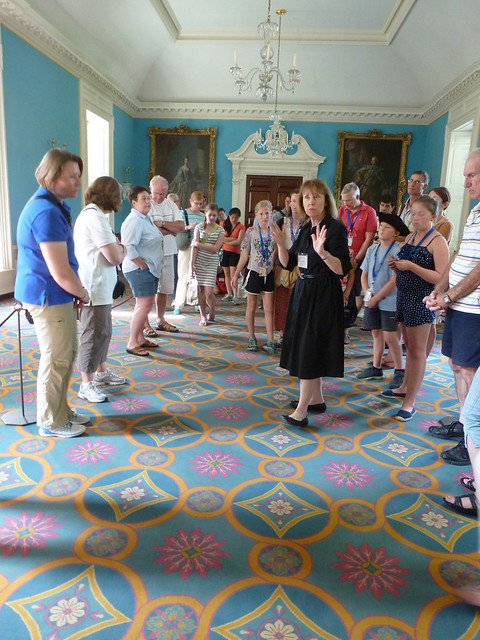
P1060667
Curator of Costumes and Textiles at Colonial Williamsburg, Linda Baumgarten,
leads a textiles-specific tour of the Governor's Palace.
Colonial Williamsburg, June 2013.

Hearing that Linda Baumgarten, curator of CW's collection of textiles and costumes, would be doing the tour the day I arrived, I made certain to secure my ticket early in the morning to ensure I wouldn't miss this unique opportunity.  Before going into the Palace, Baumgarten briefly explained the role of the curator in general, and the highlights of her specialty specifically.  Then, bringing us room to room as we moved through the building, she paused to point out and discuss individual items: curtains and blinds, bed hangings and rugs, wallpaper and wall coverings, fashion dolls and bedcovers.  It was fascinating to hear her converse about items I've seen numerous times, and I began to look at the minutiae of details that defined each and every room through different eyes.  Here's a little photo "essay" of some of my favorite little finds as I snapped away while she talked.

The residence of the Royal Governor was the most opulently decorated building in colonial Virginia. Indeed, so excessively extravagant did it seem to the colonists that they nicknamed it the "Governor's Palace," and it's easy to see why!

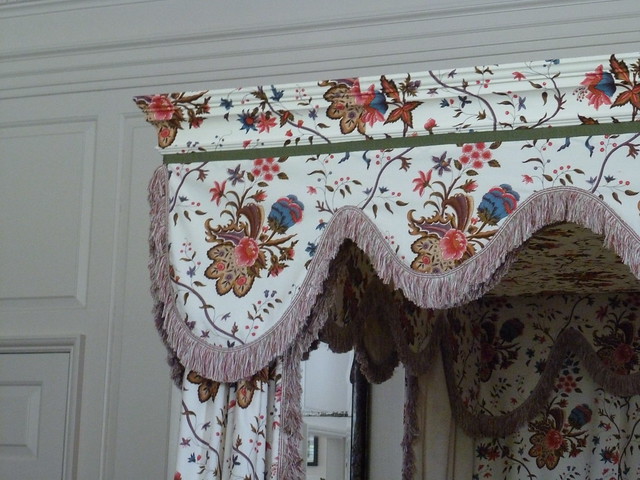
Colonial Williamsburg Governor's Palace
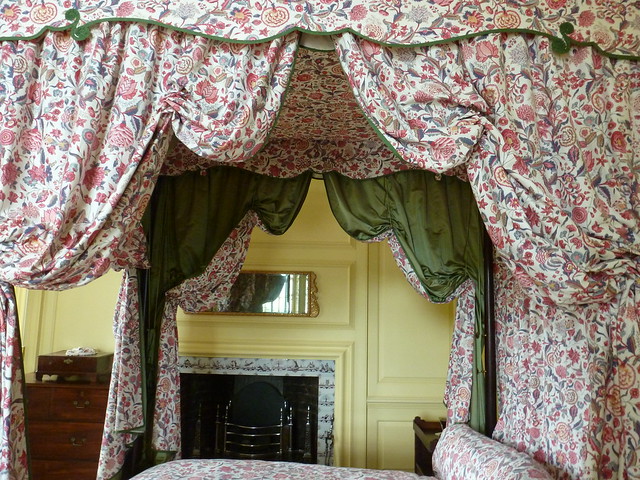
The cornice of the larger bedstead in one of the bedchambers is covered
in the same fabric from which the bed hangings are made.

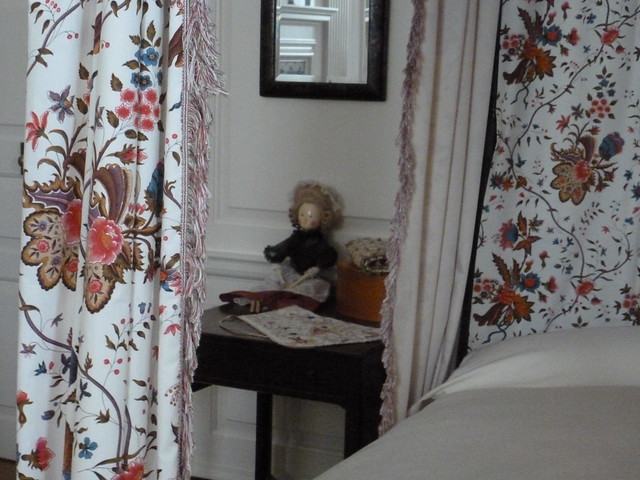
Colonial Williamsburg Governor's Palace
As this room is interpreted as one belonging to the Governor's two eldest daughters,
a fashion doll and an embroidered pocket rest on the bedside table.

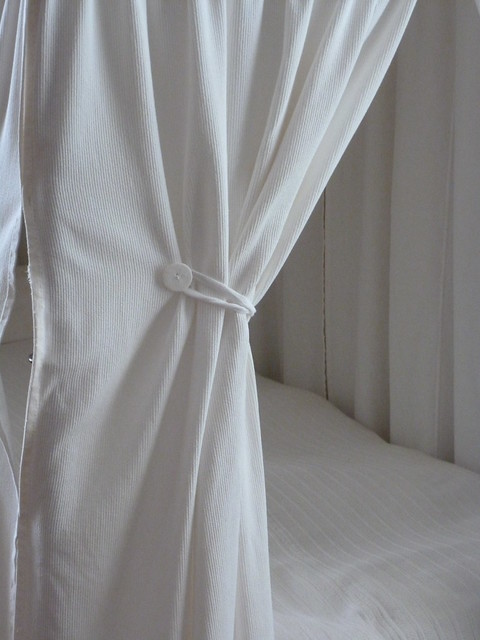
Colonial Williamsburg Governor's Palace
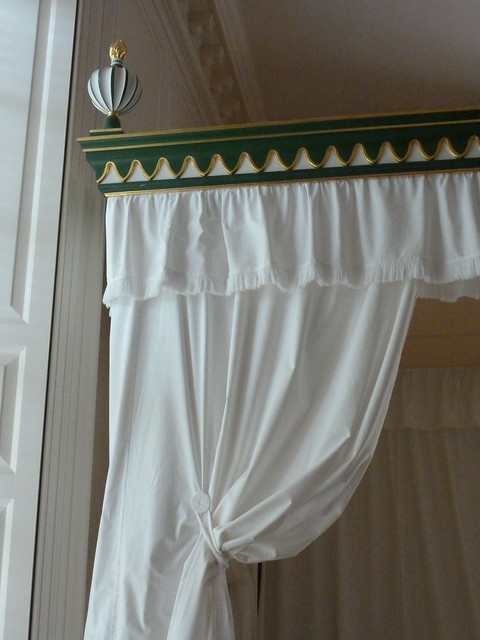
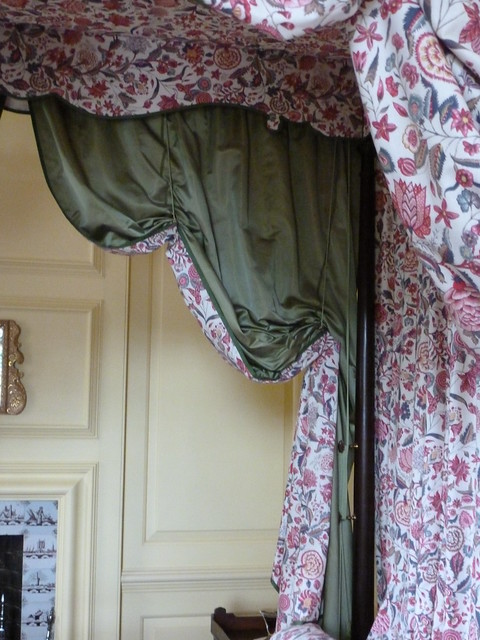
One method of fastening back bed curtains.

P1060640
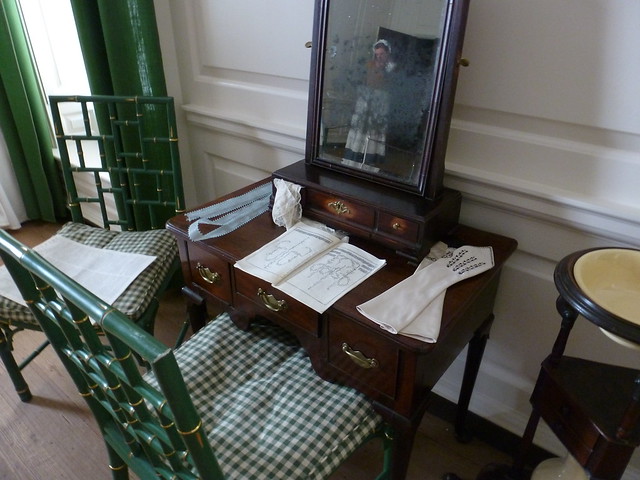
The young ladies' dressing table.

P1060641

P1060642
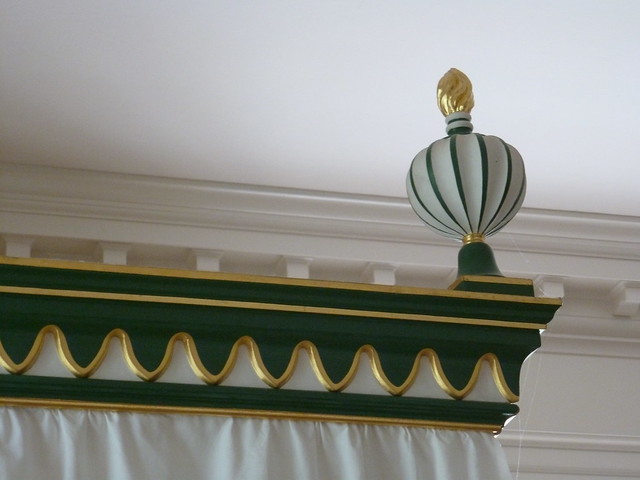
Details of a painted cornice on the bed in the next room.

P1060649

P1060651
You can see the system of rings and cords used to create the
draped effect of the bed curtains.

P1060663
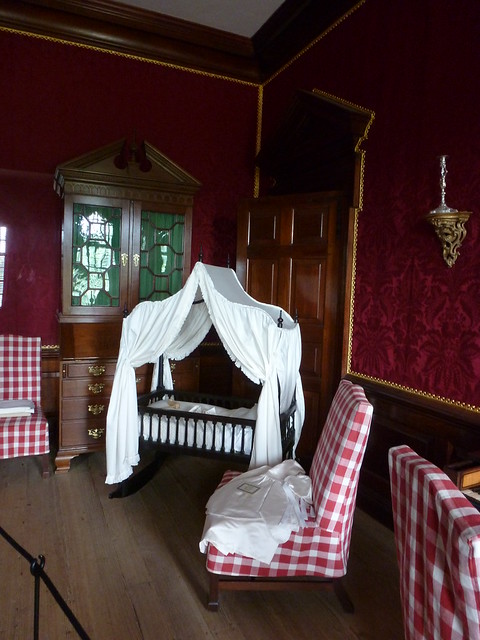
New crimson silk damask now covers the walls in the upper center room.

P1060665
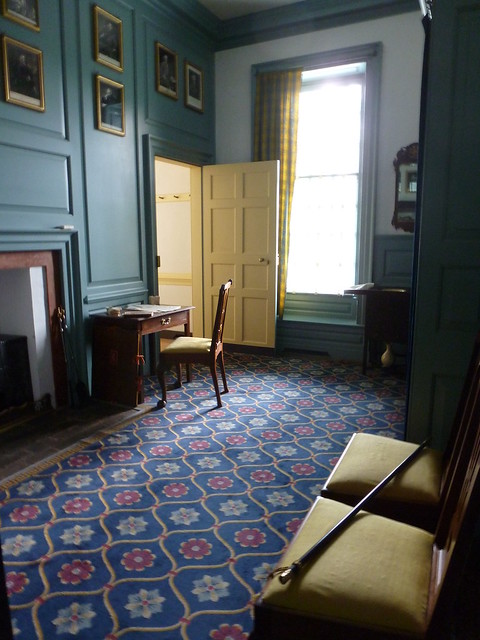
The Governor's private dressing room.

P1060669
The ceiling of the Palace ballroom.

P1060671
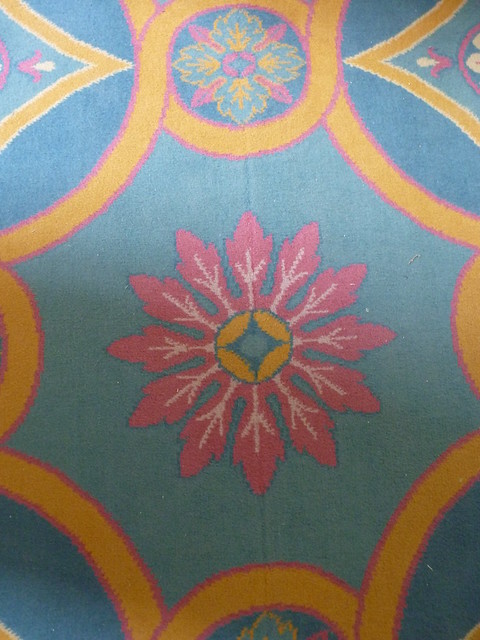
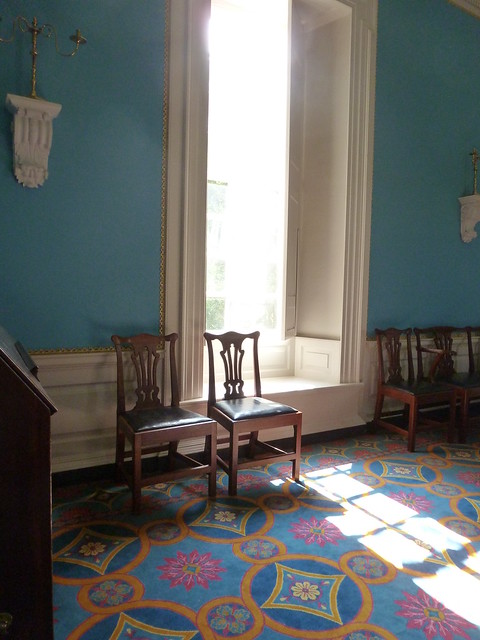
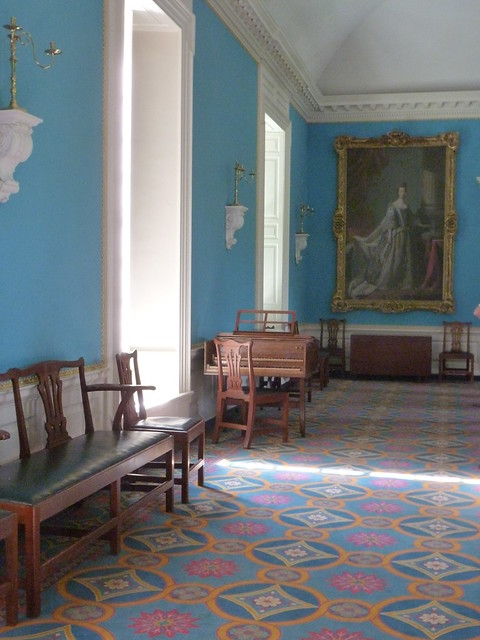
Can you see the seam in the carpet?  The carpet of the ballroom was woven
and shipped in strips from England and then sewn together when it was installed.

P1060672

P1060674
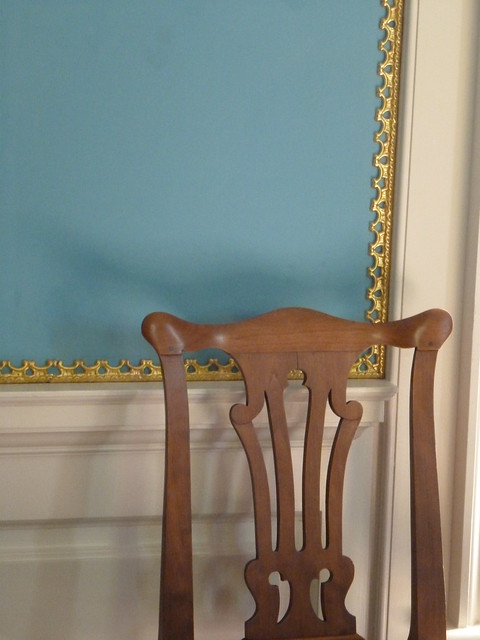
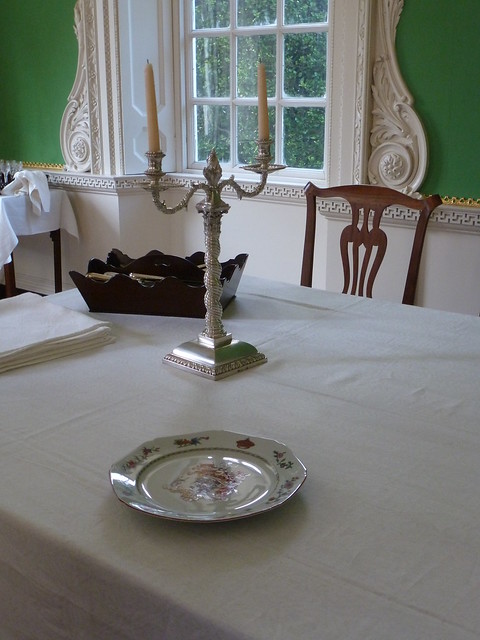
The gilt border is paper mache covered in 24k gold.

P1060680

P1060689
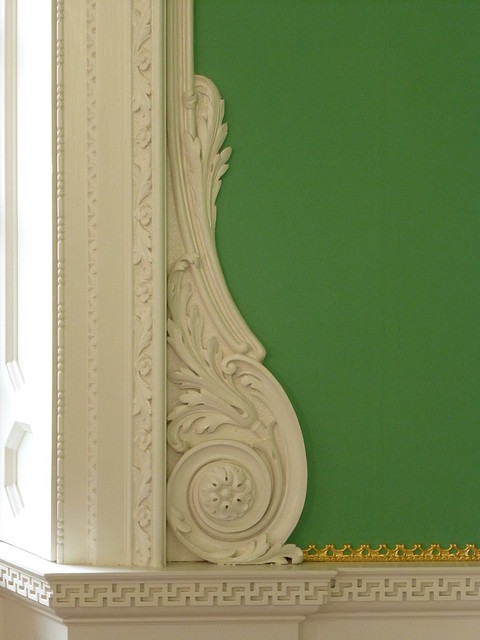
I adore the bold, bright colors of the ballroom and the supper room.
Baumgarten explained that it is not paint that provides this stunning color, but
wallpaper, which was extremely popular in these bold shades in the early 1770s.

P1060692

Clicking on any of the images will bring you to their flickr home, where you can access them in larger sizes.  You can also find the full album from the Williamsburg trip here.

Thursday, July 11, 2013

The Latest Blogiversary Addition: A "Travel" Page!

Many thanks to those of you who participated in our blogiversary survey!  We take all of your feedback to heart and will work hard to try to integrate it as much as possible to help make your reading experience here as pleasant as we can.  :-)  Don't forget to join us on Facebook by clicking the button to the right.  There you'll find frequent in-progress project updates (right now, we're working on a shortgown!), extra fashion- and history-related resources and links, and immediate notification when new posts arrive.  And we still have a couple more special blogiversary surprises in store - and you'll learn about those there as well!

Today, we'd like to introduce the next in our series of blogiversary additions to the site: a "Travels" page to help organize the numerous profiles of historic sites and museums that we've visited over the years.  Here you will find easy access to a collection of reviews of both familiar and little-known places of historical and fashion-related interest, and we hope you'll find inspiration for some of your own future journeys there!  Multiple new site visits will be added to the page soon, so keep checking back!

Tuesday, July 9, 2013

Under the Redcoat 2013

Under the Redcoat 2013
The declaration of martial law.

Because of two major anniversary events this year (namely Monmouth and Battle of the Hook), our Rev War unit elected not to attend Under the Redcoat this year.  Now that Ashley is living in VA, though, I decided to go anyway on my own, and with her schedule just so happening to work out to allow her both Saturday and Sunday off for the UTR weekend, we were able to enjoy some time together at one of our favorite reenacting events of the year.

P1060756
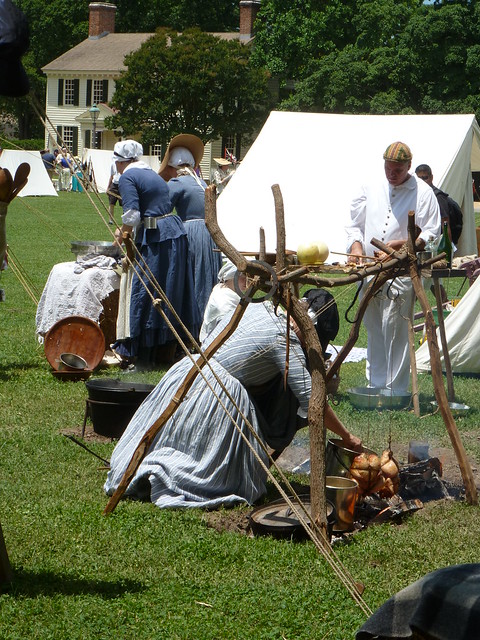
Preparing for nooning on Saturday.

P1060757

P1110399

This year's UTR was considerably smaller than has been the norm the past several years, and I assume it was for the same reason our regiment had to decline taking part: just too many larger anniversary experiences on the list this year!  Also, with the Gettysburg 150th the very next weekend, I know a lot of the reenactors who typically wouldn't miss UTR who opted to do that instead.  Ashley and I had talked about going to Gettysburg for the battle and then decided not to after the not-too-fun soaring temperatures of last year!

P1110397

P1110398

P1110395

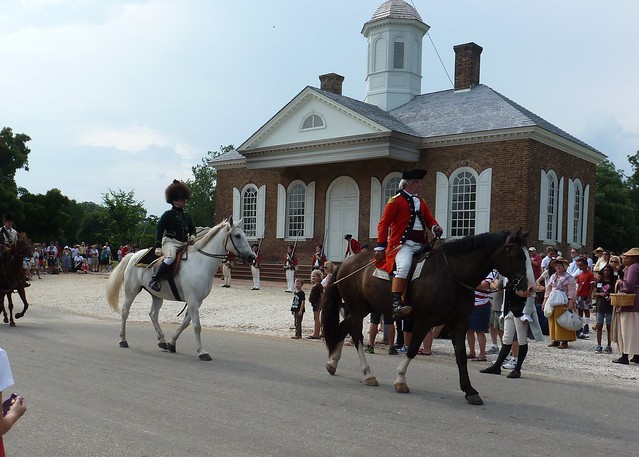
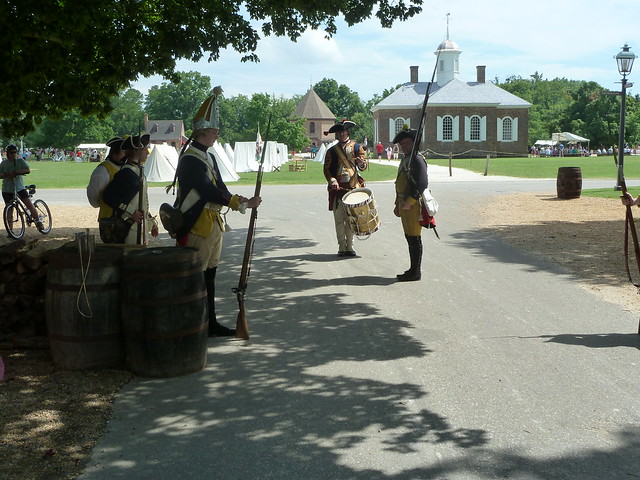
The UTR encampment and guard duty patrol was thus considerably reduced in number, but those who were there still put their best forward with excellent demonstrations and enthusiastic guest engagement.  I have to admit, though, that it did feel a bit strange walking down Duke of Glouchester Street and only getting stopped once - and by an exceedingly friendly group of guards, nonetheless!  Much different from the usual strict questionings, mandatory searches, and stern glares one is typically subjected to at check points in UTR British-occupied Williamsburg in the past! 

P1110426
Guards keeping watch over the entry points to the occupied city of Williamsburg.

But we certainly had a lovely time over the weekend, and enjoyed the rare luxury of not having official camp duties to tend to by stopping to visit friends in camp, going to some of the special weekend programming, and strolling around town.  Hopefully next year, we'll be back again in the company of our regiment for even more fun!

Under the Redcoat 2013
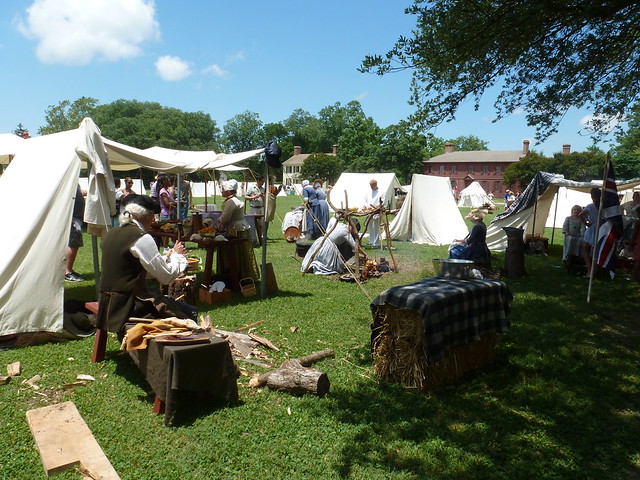
Strolling through camp on Saturday.

Wednesday, July 3, 2013

A Pretty Polonaise in Two Days!

I'm sure many of your have already seen the spectacular orchid and yellow silk taffeta polonaise created by the ladies of the Margaret Hunter Shop at Colonial Williamsburg this past UTR weekend.  If you haven't, photos of the gown in progress and completed are now up on their Facebook page!

P1060734
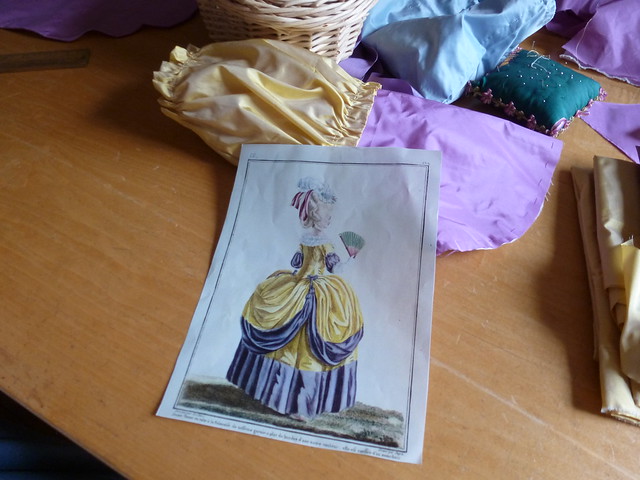
The 1780 Galerie des Modes print from which the gown was copied.

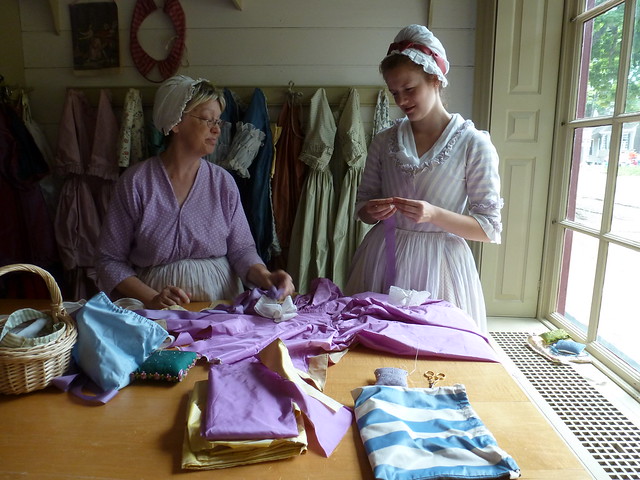
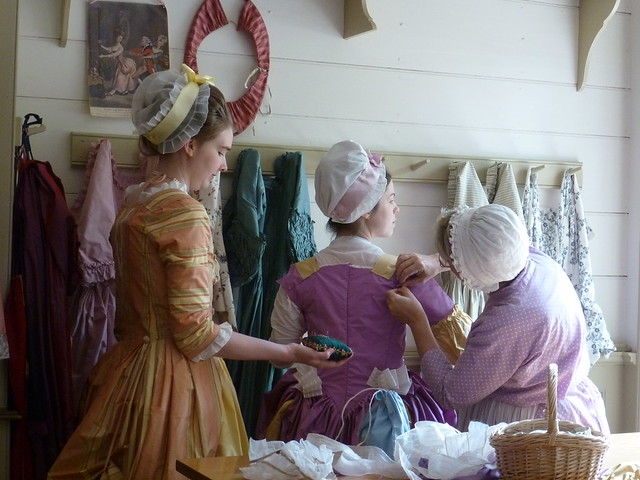
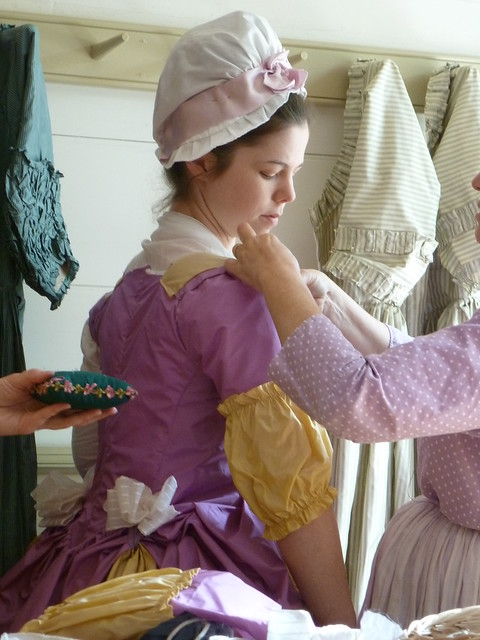
The ladies began the gown first thing on Friday morning and finished it just before 3pm on Saturday afternoon.  We were fortunate enough to time our visit to the shop on Sunday to catch them in their final fitting, positioning the shoulder straps and setting the sleeves.  The shop was a-buzz with seven different pairs of hands hard at work stitching away, putting the final touches on the trim and the ribbons that would secure the polonaised skirt.

P1060731
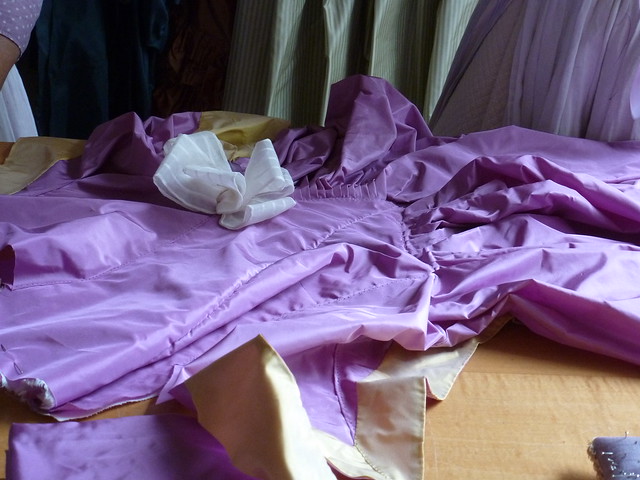
Working on the second bow...

P1060733
...to finish the back of the gown.

The gown is copied from a Galerie des Modes fashion plate from 1780 and features, as the Mistress of the shop explained, one of the most popular color combinations of the season.  As we looked at the source print, Mistress Janea shared some of the story of how she approached the reproduction of the gown, choosing to replicate most of the visible details, but electing to make some interpretive choices to change some minor things as well (like substituting bows for the tassels to drape up the skirt, and reversing the colors).  She also talked about how they selected another plate from the same period as a guide for imagining what the front of the gown might have looked like.

P1060741
Fitting the shoulders.

P1060745

P1060730
One finished sleeve...

P1060749
...while the other is being set into place.

P1060753

The finished product is stunning!  Apprentice Abby, who served as the model for the gown in addition to working on it, took it out for a stroll upon its completion, demonstrating the very height of fashionable attire to the war-ravaged citizens of British-occupied Williamsburg!

P1060870
Modeling the finished polonaise!

More about the inspiration fashion plate can be found here at A Most Beguiling Accomplishment.  And don't forget to check out the Margaret Hunter Shop's documentation of the project on their Facebook page!

Monday, July 1, 2013

Threaded Bliss

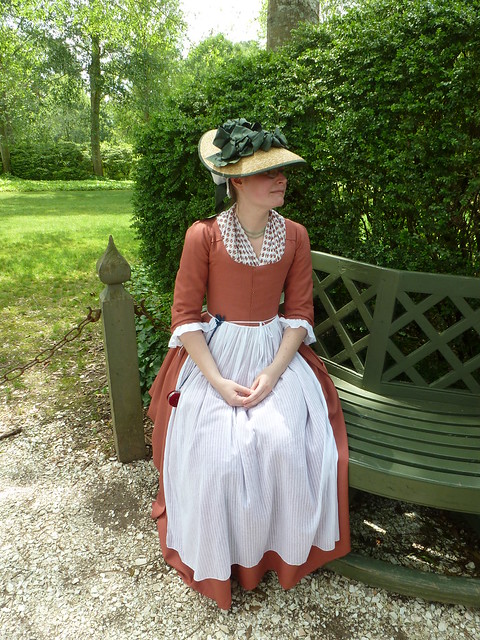
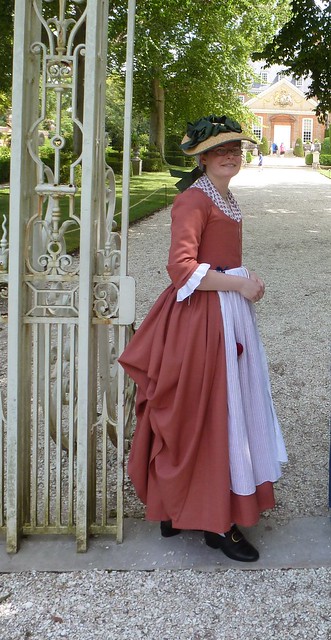
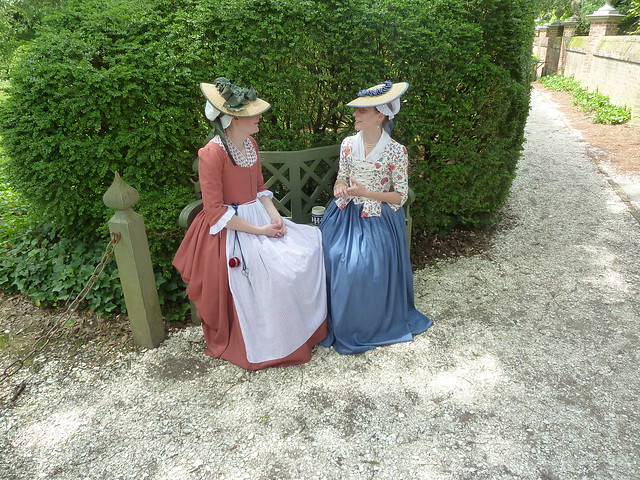
Fitted-back English Gown in Pink Worsted,
1775-1785

pink worsted gown, 1775-1785
Colonial Williamsburg, June 2013.

Because Battle Road takes place so early in the New England spring, it’s typically pretty chilly standing outside all weekend long, especially since we don’t have the luxury of our own campfire to huddle around to keep warm.  I decided a wool gown was thus in order for the event, and I finished this one just in the nick of time the evening before.   The number of visitors over the weekend, however, prevented me getting more than one photo of the gown during Battle Road itself, so its Threaded Bliss post had to wait until the gown’s second wearing, which happened in weather that fell at the complete opposite of the temperature spectrum – Under the Redcoat this past weekend!

Untitled
Colonial Williamsburg, June 2013.

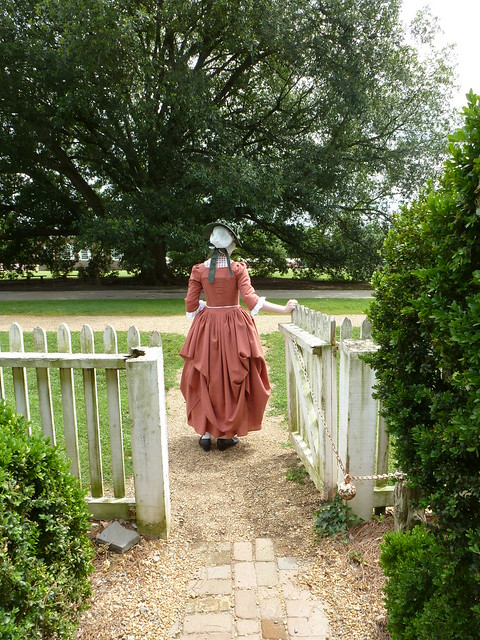
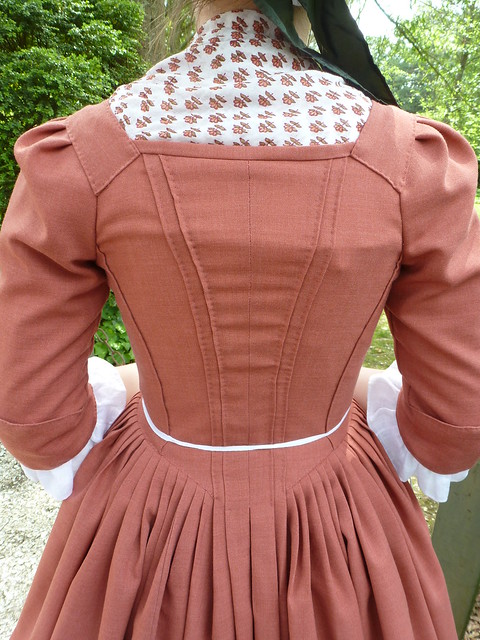
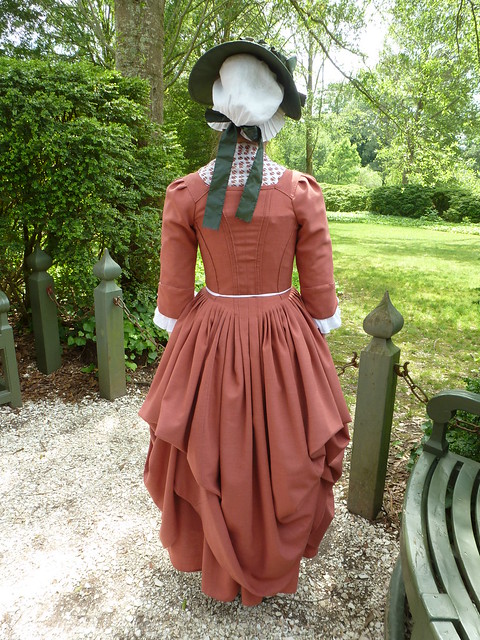
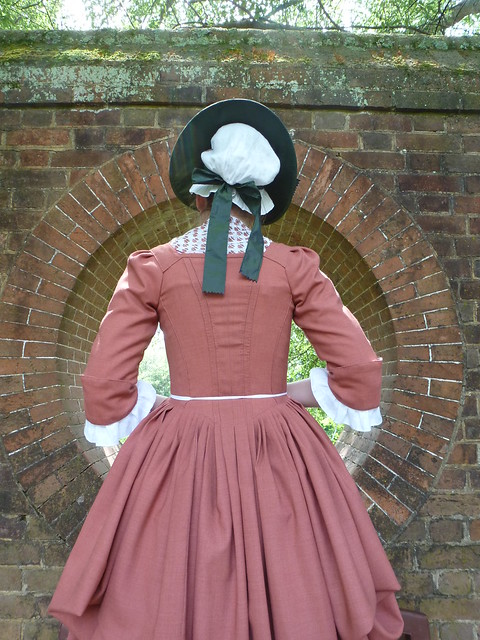
The pattern: The bodice and sleeves were draped on me by Ashley at the gown workshop last November.  I worked the back pleats to reflect the narrower, more curved shape popular from the late 1770s into the very early 1780s.

pink worsted gown, 1775-1785
Colonial Williamsburg, June 2013.
 
Construction details: The construction details of this gown are identical to those shared in multiple earlier fitted-back “English” gown posts, but since it’s been a while since the last one, I’ll just do a quick outline again. As always, it was created using period techniques and is entirely hand-sewn. The first step was to shape the back "en fourreau" pleats and stitch them down to the back lining piece to form the gown’s back panel.

pink worsted gown, 1775-1785
Detail of the back pleats.

pink worsted gown, 1775-1785

pink worsted gown, 1775-1785
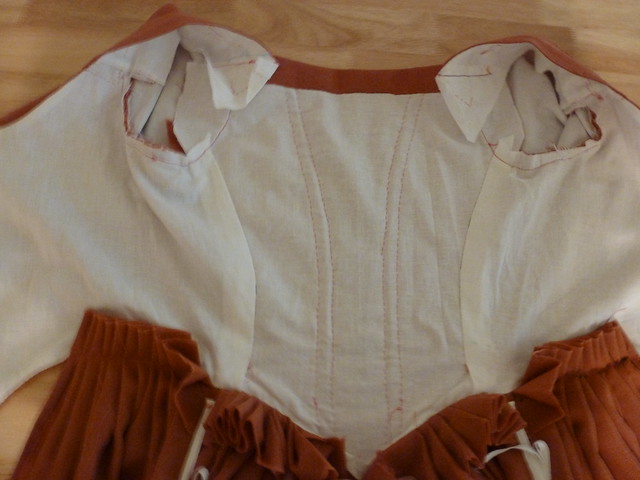
Innards of the gown's top half.  The armscyes are not finished and the top of the
pleated skirt panels are not enclosed in the lining, features which were
quite common to 18th-century gowns.

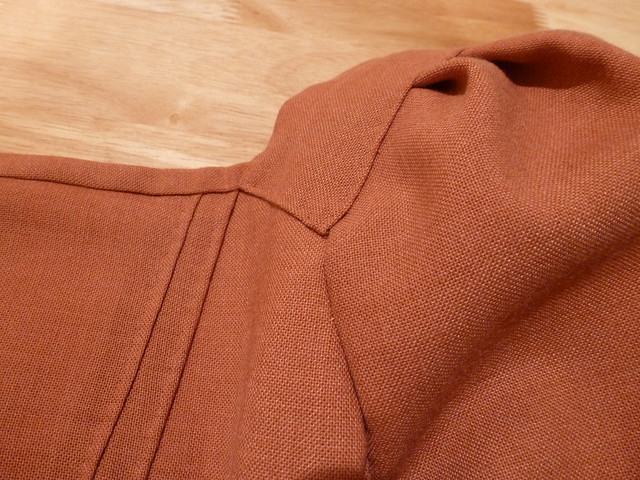
Because I didn’t have Ashley at home to drape a brand new bodice and sleeves specifically for this gown, I used the pieces she draped at the workshop as my “pattern” for the rest of the top portion (the workshop gown is still waiting for a Threaded Bliss post of its own, so stay tuned for that!). The finished bodice fronts were then fitted to the back and top-stitched down. After the sleeves were set into place, the shoulder straps were cut, arranged, and top-stitched to cover the raw caps of the sleeves.

pink worsted gown, 1775-1785
Detail of the back, with the shoulder strap meeting the back panel pleats.

The gown’s skirts were pleated up next with ¼” pleats and a set of cuffs added, both details in keeping with the specifics of the years for which I was aiming. I also added a set of cotton twill tape ties to drape up the skirts to keep them away from the muddy paths and fields of Battle Road.

pink worsted gown, 1775-1785
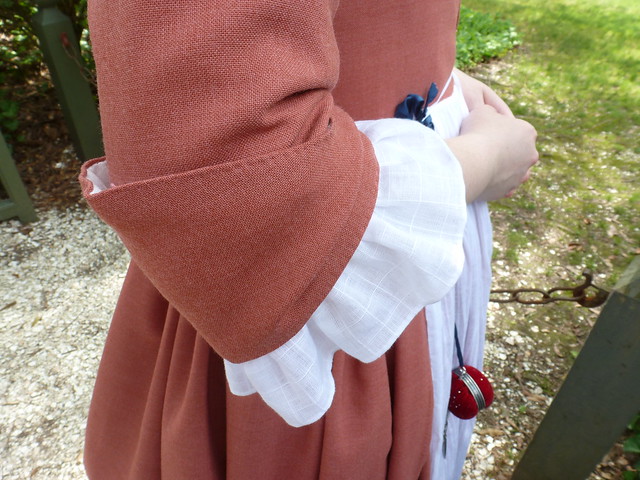
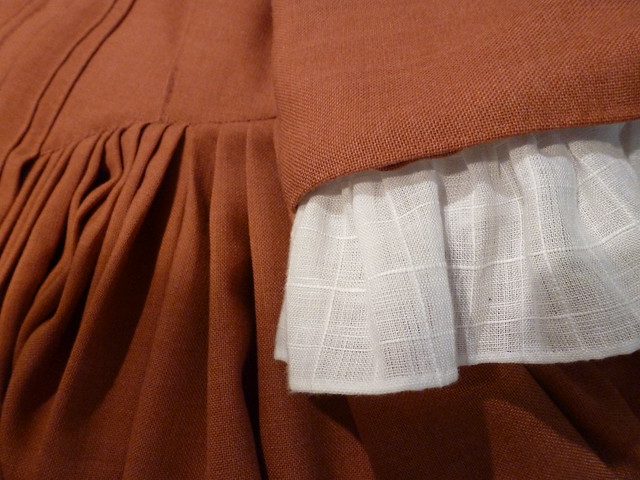
Cuffs with detachable linen sleeve ruffles sewn in.

The fabric: A “tropical” weight worsted wool in a lovely rosy pink color, lined in a medium-weight ivory linen. From damp, chilly temperatures in the lower 50s to hot-and-humid 95 degrees, this gown has proven itself quite comfortably versatile, and I really, really like it!

Untitled
Colonial Williamsburg, June 2013.

Finishing the look: The gown is worn over a linen shift, fully-boned stays, and a linen underpetticoat, and is paired with a matching petticoat.  Window-pane checked white linen lawn ruffles, very narrowly hemmed, embellish the ends of the cuffed sleeves.  The ruffles are sewn to a cotton tape band and then simply whipped roughly into the lining of the sleeve so that they can be easily removed to be worn with another gown or to be laundered.

pink worsted gown, 1775-1785
Detail of the detachable linen lawn sleeve ruffles.

A printed cotton neck handkerchief (from Burnley and Trowbridge) fills in the low, wide neckline of the gown. I made a tucker of the same window-pane checked linen as the ruffles, but elected to wear the kerchief at both Battle Road and UTR (the first because of the cold, the second because of the sun), so I don't yet have pictures of it with this gown. I also have a matching apron to complete the "suit," so when I wear them all together, I'll be sure to do an updated post!

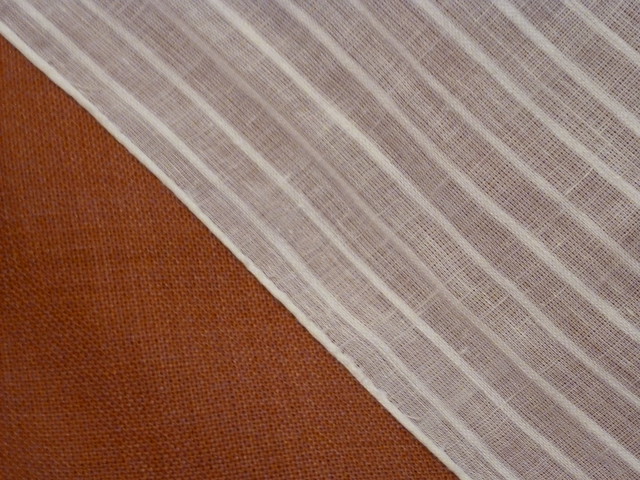
The apron worn with the gown in the pictures here is a striped cotton gauze with a teeny rolled hem that took forever because of the loose weave of the fabric. In the end, though, it was worth the time and frustration because I like how the very sheer stripes show up against the solid pink background of the petticoat.

striped cotton gauze apron
Striped cotton gauze apron.

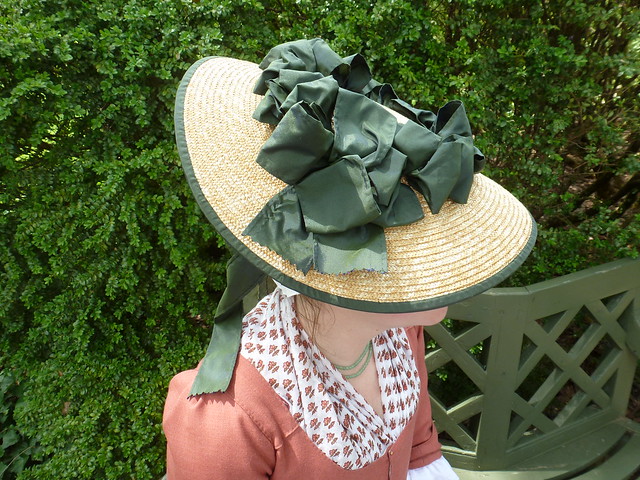
Completing the ensemble is a new hat trimmed with blue/green changeable silk taffeta.  The taffeta forms poofs around the crown, with a big, wide bow set to one side. The underside is lined in the same taffeta and the edges of the brim finished with a narrow strip of it.  Lining hats that were trimmed but not covered on top was quite popular in the late 1770s and 1780s (as was lining in a contrasting color to a covered top, as seen in one of our inspirations in this earlier post). The inspiration for my hat came from the hat on the left in this John Collett print from 1778 entitled "The Manchester Hero, or Arts Yield to Arms."

"The Manchester Hero, or Arts Yield to Arms," 1778
(mezzotint print after John Collett).
Image linked from the British Museum.

pink worsted gown, 1775-1785
My version of the hat, with the underside lined with the same
blue/green silk with which the top of the hat is trimmed.
Colonial Williamsburg, June 2013.

I decided to add a bit of embellishment by doing poofs around the crown instead of just the plain wrap-around ribbon, poofs being quite common during the same period, and much more interesting to the eye!

blue/green trimmed and lined hat
Poofs of silk taffeta surround the crown, while a narrow strip finishes the edge of the brim.

Additional photos can be found in this project's flickr set.