Showing posts with label Thomas Jefferson. Show all posts

Saturday, July 14, 2012

Going Antiquing at the Booksale

Here in New England, May through October is the traditional season for library booksales.  Many of our regional libraries hold massive sales with hundreds of thousands of volumes, featuring books old and new, on every subject under the sun.  Quite often, they also feature special rare and antique book rooms with treasures that have been priced by local antiquarian book dealers.  Today, we made a bunch of pretty nifty discoveries and came home many pounds heavier for all the books in Ashley's trunk!

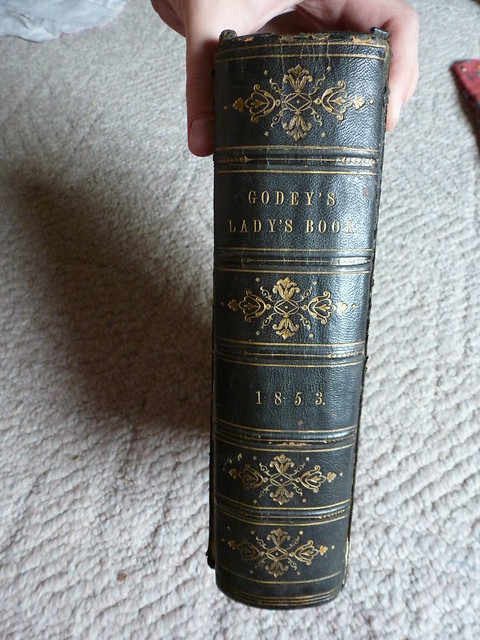
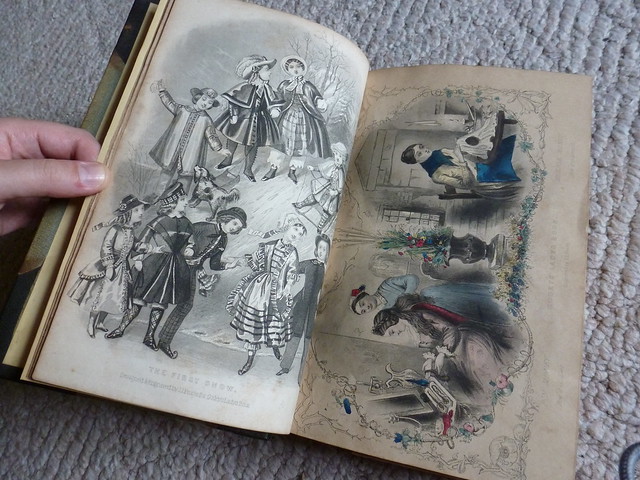
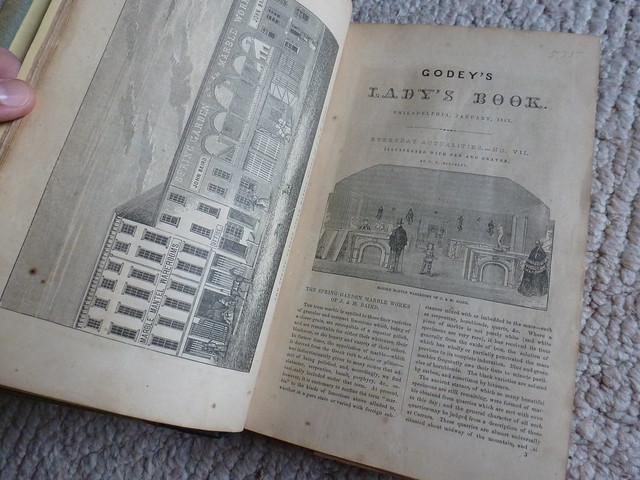
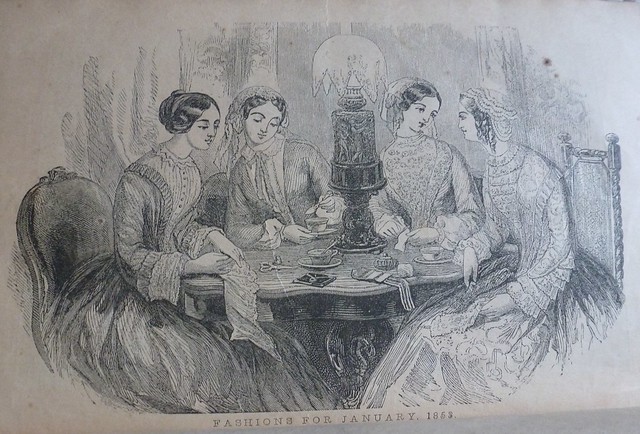
By far my most favorite find was an 1853 bound volume of Godey's Lady's Book, which includes all of the original color plates.  If there's sufficient interest, let me know and I can try to start scanning or photographing the issues (or at the very least the plates) and posting them here on the blog. Here's a quick sample:

Godey's 1853

Godey's 1853

Godey's 1853

Godey's 1853

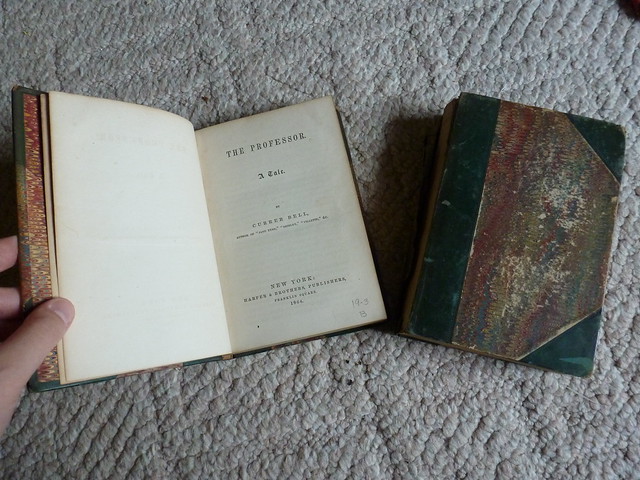
Another pretty exciting discovery were two early Harper and Brothers printings of Charlotte Bronte's The Professor and VilletteThe Professor is dated 1864 on the title page; Villette is undated, but I'm assuming it must be from about the same time because of the consistent type, layout, and binding.  As you can see, "Currer Bell" is still listed as the author on the title pages of both.

1864 Harper editions of Villette and The Professor

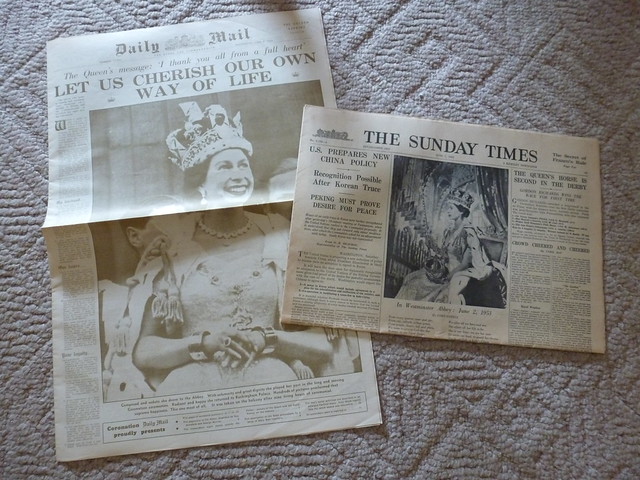
My other thrill was finding two 1953 London newspapers - one The Sunday Times and one the Daily News - covering the coronation of Elizabeth II.  The Daily News paper is a special commemorative issue with loads of neat pictures.

1953 London papers from the Coronation of Elizabeth II

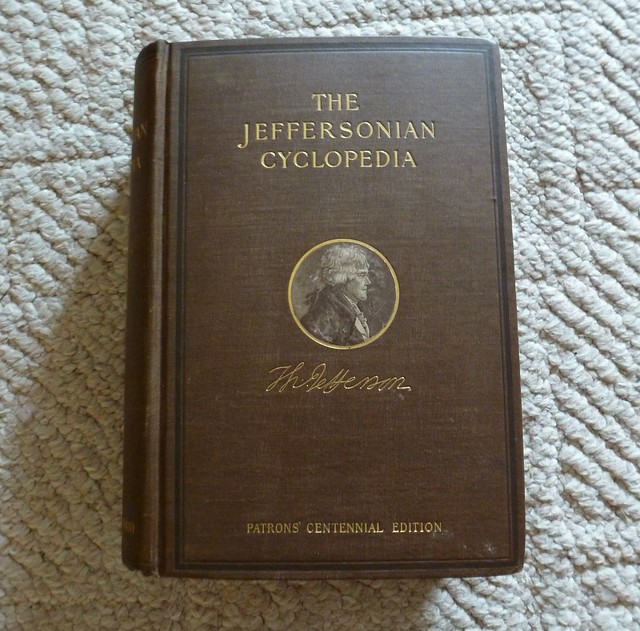
Ashley's highlight of the day was bringing home a 1900 edition of The Jeffersonian Cyclopedia, which collects quotations from Thomas Jefferson on over 9000 topics and arranges them alphabetically to form a catalogue of the president's thoughts.

Jeffersonian Cyclopedia

All in all, a pretty successful booksale day!

Friday, May 18, 2012

Springtime Frolicks in Colonial Williamsburg

During our recent trip to Colonial Williamsburg for the 150th Commemoration of the Battle of Williamsburg, we were glad to have some time to enjoy some 18th century fun as well. As always, we were excited to spend time with good friends who were also visiting, and we welcomed the chance to say hello to our CW friends, but there never seems to be enough time to do everything we want to do.  One of the other highlights of the long weekend was that we heard some great lines for our "Visitors Say the Darndest Things" list.  My favorite from this trip being a quote from a mother to her daughter as she urged her to put away her cell phone to get into the 18th century spirit: "They didn't have cell phones back then!  They probably didn't even have telephones!"

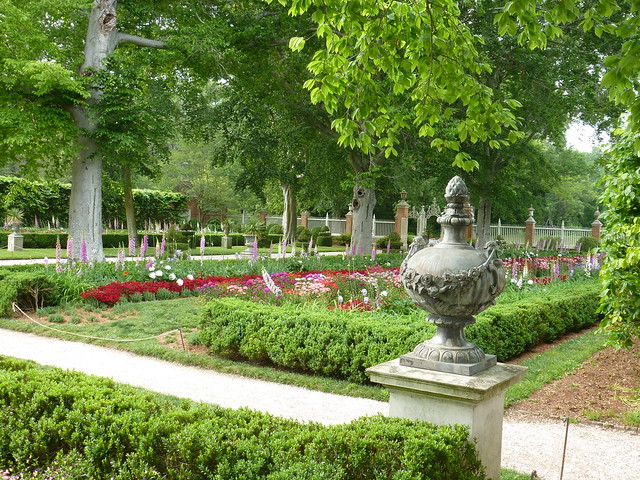
Colonial Williamsburg
Gardens in bloom at the Governor's Palace.
Colonial Williamsburg, May 2012

We arrived Thursday evening just in time to grab some dinner, pick up our tickets, and run over to the Kimball Theatre for a performance of The Walking Statue, or The Devil in the Wine Cellar. Once again, the theatrical cast provided an extraordinary performance full of humor and fun. How can you not enjoy an 18th century play?  The audience also performed quite well, providing boisterous "Huzzah!"s and many well-timed "Encore!"s.

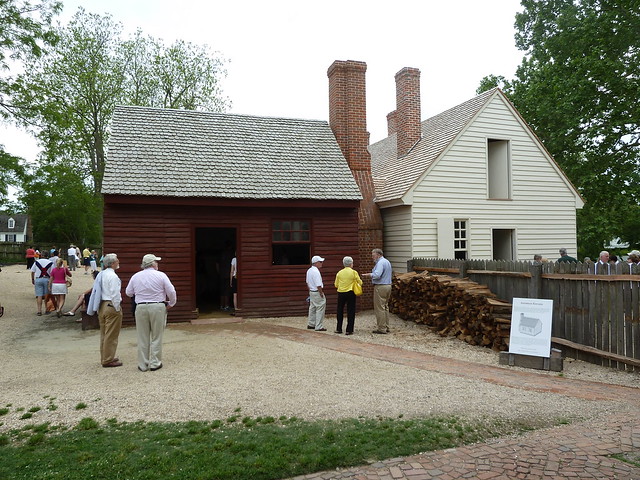
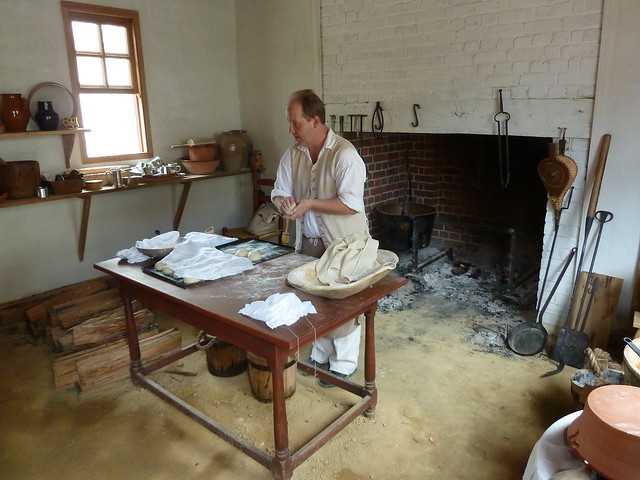
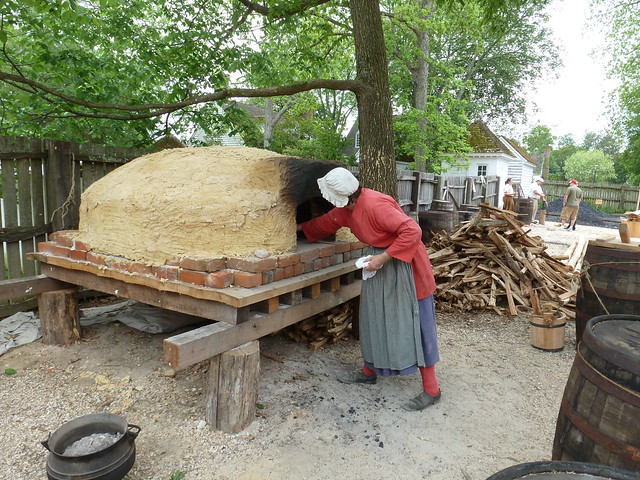
On Friday, we enjoyed the warm weather, strolling on the shady sidewalks to do some shopping. You know Rebecca couldn’t resist the opportunity to buy more fabric! And I couldn’t resist the opportunity to visit with Mr. Jefferson and Mr. Barker in the St. George Tucker House! As always, the room was full and we all engaged in a wonderful confab.  That afternoon, we paid a visit to the recently reconstructed blacksmith and armoury buildings.  In the kitchen, we learned about the simple meals that would have been prepared for the large number of men working in an armoury business like the one portrayed here.  Outside, the beehive oven was taking care of some delicious bread!  The main building of the site was very crowded at the time, so we took a quick glance in.  After following the progress of this project, it was neat to see it completed and to look for all of the different aspects that I learned about through the reconstruction blog.

Colonial Williamsburg
The Anderson Armoury site with the kitchen (left) and main building.
Colonial Williamsburg, May 2012

Colonial Williamsburg
Anderson Armoury Kitchen
Colonial Williamsburg, May 2012

Colonial Williamsburg
Using the beehive oven at the Anderson Armoury site.
Colonial Williamsburg, May 2012

Colonial Williamsburg
Blacksmiths work inside the newly reconstructed Anderson Armoury.
Colonial Williamsburg, May 2012

Friday evening was one of my "main events" for this visit.  Wolf by the Ear: Thomas Jefferson and the Pursuit of Freedom was a special program being presented in conjunction with this weekend's Civil War themed events.  I believe it was originally produced for a performance at the Chautauqua Institution and am not sure if there are plans to repeat it at CW in the future.  The program takes place in 1820 and opens with Mr. Jefferson anxiously waiting to hear if Missouri will be brought into the union as a slave or free state.  As he reflects on such defining moments in history, the audience watches his reminiscences play out.  We heard Patrick Henry and Edmund Randolph debate about ratifying the Constitution, and also listened to the thoughts of Henry Clay.  Jean Jacque Dessalines, leader of the Haitian Revolution also spoke, rallying his troops towards freedom.  In the end, as history will tell us, Missouri was admitted as a slave state, dividing the union further.  The story of this critical decision was told with such passion, not just through the words of these founding fathers, but also through the talents of these very talented interpreters.  It was an immensely moving performance and I have to admit that I was in tears as everyone joined in singing the Battle Hymn of the Republic at the end.
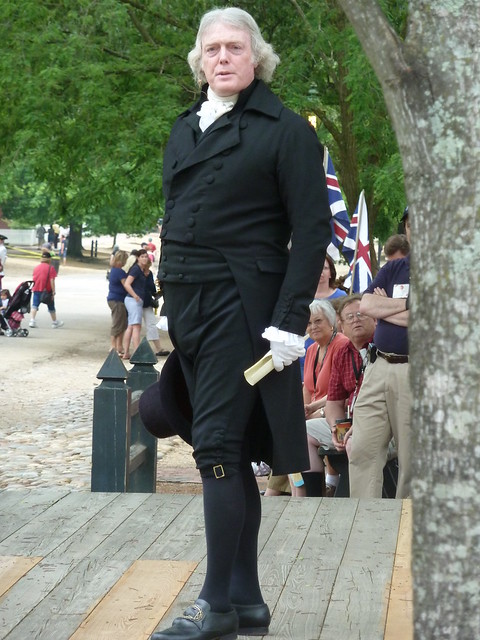
Colonial Williamsburg
Mr. Jefferson discusses some issues in the early years of the United States.
Colonial Williamsburg, May 2012

We were able to catch a few scenes of Revolutionary City over the course of our stay.  Saturday's scenes were chosen from the usual Rev City repertoire to compliment the Civil War weekend.  Although the events were based on those of the late 18th century, the topics and issues were still relevant to the time leading up to the Civil War.  "Promises of Freedom," the scene depicting Dunmore's Proclamation, touched on the hardships and uncertainty that slaves faced on the eve of the Revolution.  George Washington and Thomas Jefferson spoke in front of Raleigh Tavern about some difficulties in the early republic and the threat of disunion.  Just before Saturday's Rev City, some dark clouds started to hover over the historic area.  We didn't want to miss anything though, so we grabbed our umbrellas and hoped for the best.  When Washington and Jefferson had completed their speeches, they stepped off the stage to engage in an informal question and answer session, and although the raindrops were starting to fall, I didn't want to miss it.  We all huddled under our umbrellas to listen until the presidents (and all of us listeners!) were thoroughly soaked through.

Colonial Williamsburg
President Washington announces he will not run for a third term.
Colonial Williamsburg, May 2012

I stayed on Monday afternoon to see some more Rev City and to catch the opportunity to say hello to an old friend.  If you have not heard, CW has revamped their daytime program once again and I believe it will debut on June 18th.  When Revolutionary City was first integrated into the CW interpretive programs, I was a little apprehensive to see stages and microphones all over the historic area and I felt that the scenes were too scripted.  Over the years, as I've observed visitors absorbing the history lessons through the Rev City scenes, I've come to appreciate it as a great teaching and learning tool.  After all, how do you overcome the challenges of reaching such a large group of visitors, who all come with different backgrounds and assumptions, within the length of their stay and over such a large geographical area?  (In case you don't know, historic interpretation fascinates me.  I can go on and on sharing my thoughts on effective interpretation... perhaps that will be another topic for another day.)  As I understand it, the new program will still have "scenes," but they will be dispersed throughout the day and will encompass more of the historic area.  Each day will represent a specific day in history, so whether you are talking to the blacksmith or Mrs. Randolph, everyone will be "living" the same "day," discussing the same issue or events at hand.  This method sounds similar to the pre-Rev City days, so I am very excited to see this new interpretation in action!
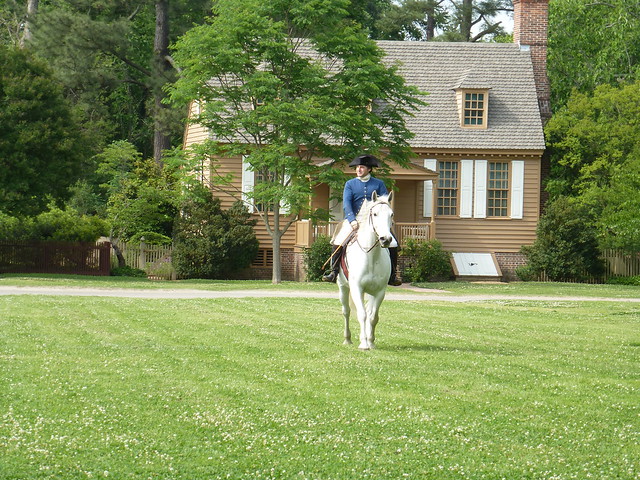
Colonial Williamsburg 
Colonial Williamsburg, May 2012

During our visit, we also enjoyed an afternoon musical program at Raleigh Tavern, as well as a brief dance lesson.  We also met with Edith Cumbo in a walking tour called "Her Enduring Spirit."  If you have never seen this program, I highly recommend looking for it the next time you visit CW.  Ms. Cumbo was a free African American resident of Williamsburg.  Her stories are fascinating and told with such spirit!  We also stopped in at the Governor's Palace kitchen on Saturday to take a peek at the process of brewing beer in the 18th century.  And, finally, we spent some time examining Richard Newsham's fire engine at the DeWitt Wallace, which was accompanied by a display about fire fighting in the 18th century; it was a very interesting piece of history that is rarely heard about.

For some additional photos from this visit to Colonial Williamsburg, please take a look at our flickr set.
Monday, April 30, 2012

Update! Jefferson Webinar

The recorded sessions from last Friday's Jefferson webinar, hosted by the Smithsonian and Monticello, are now available to view online!  You can view the free recordings by visiting the companion website.  Since I was stuck at work during the day, I was unable to view the webinar live and I am very excited that these sessions are now available to watch!  Monticello posted a fun photo from one of the sessions on their facebook page today with a fun game of "add a caption!"

Friday, April 27, 2012

Jefferson Webinar Today!


Today the Smithsonian and Monticello are hosting a free live webinar focusing on my favorite Mr. J., offered in conjunction with the exhibits I mentioned in my recent TJ birthday postJefferson: Revolutionary Thinker will include a series of discussions which will touch on the subjects of religion, slavery, the westward expansion, and more.  The lineup of presenters include Monticello president Leslie Greene Bowman, as well as directors and historians from the National Museum of African American History and Culture, and even Colonial Williamsburg TJ interpreter, Bill Barker.  Visit this page to see the full program and bios for the presenters.  The program begins at 9:50am EST with an introduction and runs until 3:50pm.  Registration is free for anyone who would like to participate, and will remain open throughout the day.  You can register online here.  For anyone unable to view the presentations live today, the recorded material will be available online at a later date.

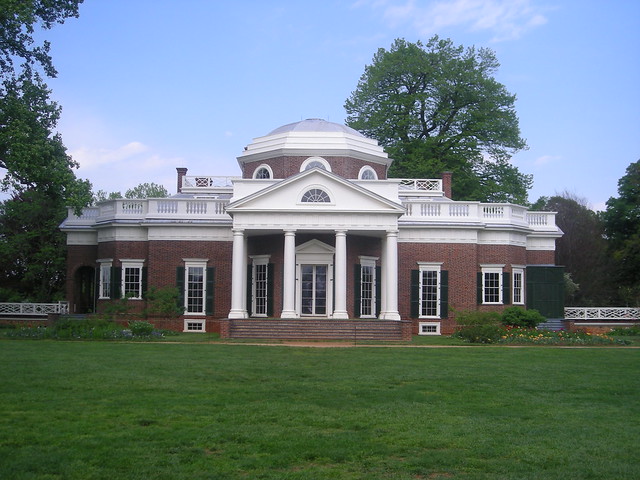
Monticello, April 2010

Friday, April 13, 2012

Happy Birthday to Tom!

Just as we did last year, I'd like to offer a special post today in honor of Mr. Jefferson's birthday!  As in the past, Monticello is holding a free ceremony today which is part of the annual Founder's Day at UVa.  Poplar Forest will be serving cake to all who visit Jefferson's retreat today.  William & Mary is hosting an innovative event tonight for its community which is also meant to mark the 250th anniversary of Mr. Jefferson completing his studies at W&M.  You can read about the interactive AVAdventure here.

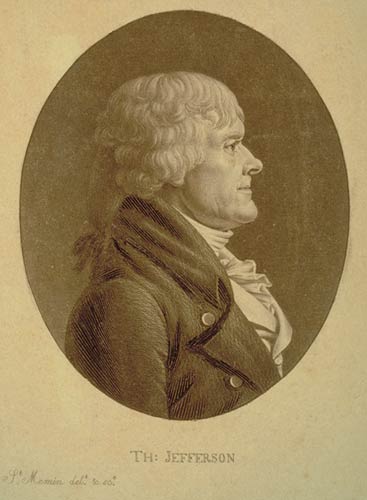
Portrait of Thomas Jefferson (1743-1826)
1805
Artist: Gilbert Stuart (1755-1828)
Origin: America, District of Columbia
Unframed: 29 5/16" x 24 1/2" (74.5 cm. x 62.2 cm.) and
Framed: 36 9/16" x 31 11/16" x 2 3/4" deep
Oil on canvas
Acquisition funded by John D. Rockefeller, Jr.

Acc. No. 1945-22

Last year I shared some fun facts and today I'd just like to share some recent Jefferson-related news and activities that might be of interest.

New exhibits at Monticello and the Smithsonian focus on the lives and work of the enslaved workers at Monticello.  Mulberry Row has been brought back to life through new "mini-exhibitions" on site, as well as a new tour (which runs April through October), helping visitors to understand more fully the way of life at Monticello during Jefferson's life.  The companion website, Landscape of Slavery: Mulberry Row at Monticello, provides a deeper look through profiles of several slaves, descriptions of the varied trades practiced, and maps of the evolution of this section of Jefferson's land.

Now at the Smithsonian's National Museum of American History in Washington D.C. is another exhibit which discusses the practice of slavery in the 18th century and particularly focuses on slavery at Jefferson's home.  It explores the daily lives of his enslaved people, with emphasis on individuals and their families during their time at Monticello.  Another excellent companion website provides articles and features that give us a glimpse into just a few of the lives that were effected by slavery.  This exhibit runs until October 14, 2012.

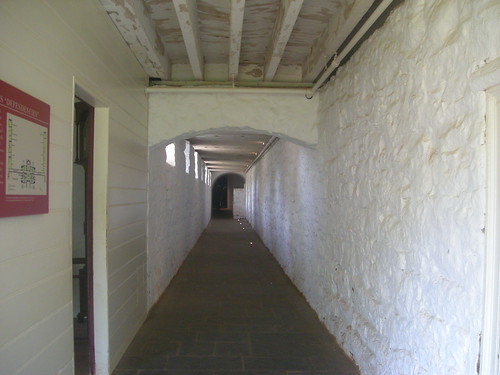
Monticello Cellar Passage
The passageway under Monticello leads to the kitchens, storage,
and other dependencies.
April, 2010

Also currently on display the Smithsonian National Museum of American History is "Jefferson's Bible."  Jefferson's compilation of different transcriptions of the Bible was meant as a personal exercise in order to better understand the life of Jesus, or as he titled it, "The Life and Morals of Jesus of Nazareth."  You can view the book digitally as well as explore the conservation process on this website.  The book will be on display until July 15, 2012.

Recently published by the Massachusetts Historical Society and the Thomas Jefferson Foundation, Thomas Jefferson's Granddaughter in Queen Victoria's England is the 1838-39 travel diary of Ellen Wayles Coolidge during a visit to England with her husband.  Her observations on London society, museums, and the British monarchy not only provide us with insight of Victorian England, but her recollections of her youth and home life provide us with a glimpse into her family.  The book is available for purchase through Monticello and amazon.com.  

Colonial Williamsburg has reinstated the Jefferson Blog.  Each week a Jefferson quote is posted on the blog and visitors are encouraged to respond discussing the relevance of his words to our world today.  To celebrate the 250th anniversary of his W&M graduation, the quotes are focused around education.

Wednesday, April 13, 2011

Happy Birthday, Tom!

Today marks the 268th anniversary of Mr. Jefferson's birth!  For those of you who do not know, I have a rather ardent fondness for Mr. Jefferson (okay, that might be an understatement...) and so I wanted to be sure to give him a small tribute here today.  Although there is no evidence that he celebrated his own birthday, I hope he doesn't mind.  To commemorate today, the Thomas Jefferson Foundation will be hosting some special events at Monticello in conjunction with the University of Virginia's Founder's Day celebration.  Also at UVa today is the first annual JEFFERSING! ON THE LAWN, which will feature a cappella groups, birthday decorations, and free cupcakes!  Mr. Jefferson will be in attendance (in the personage of Bill Barker) to join in the festivities.  Poplar Forest will also be distributing birthday cupcakes to all of its visitors today.


I could go on and on about what makes Mr. Jefferson such an inspiring man, why he's so relevant today, and about how awesome and dreamy he is... but I will spare you all that.  Instead, I'll share a few facts that many of you might know already, but hopefully will be new information for others.

Fun Fact #1: April 2, 1743 O.S. is the date engraved on Jefferson's grave (see photo below), but we celebrate the day on April 13.  In 1582, Pope Gregory XIII began the calendar system we use today, known as the Gregorian calendar.  This replaced the previous Julian calendar (named for Julius Caesar) which had fallen several years behind the solar calendar.  The British empire did not conform to this system for several hundred years.  In 1752, when Britain finally adopted this calendar system, Mr. Jefferson added the additional 11 days to his birth date.  (You can read more about the switch from the old style calendar on this page.)

The obelisk marking Jefferson's grave at Monticello

Fun Fact #2: Many people attribute the invention of the swivel chair (which he often referred to as his "whirligig" chair) to Mr. Jefferson, but there is no definite proof that he was indeed the first to add some spin to his seat.  In 1775, he purchased a revolving Windsor armchair in Philadelphia.  The chair was built with two seats on top of each other, revolving around a center spindle.  During his stay in New York as Secretary of State, Mr. Jefferson purchased several pieces of furniture from Thomas Burling.  Among this collection was another revolving chair, which has a design attributed to the French.  Knowing that Mr. Jefferson already had a similar chair at home and considering his recent residence in France, it is often suggested that he may have had a hand in designing these Burling chairs (Burling also made one of these chairs for George Washington).

Fun Fact #3: Speaking of inventions, how about the myth that he was the first to bring mac & cheese (which, by the way, is one of my all-time favorites!) to America?  The NY Times recently published an article about Mr. Jefferson's appreciation for macaroni, a dish he first encountered in northern Italy during a 1781 visit.  He had a macaroni machine imported to America and macaroni became a frequent dish on his table.  While he definitely introduced many Americans to macaroni, he was most likely not the first to serve it in this country.  A pasta factory in Trenton, NJ, owned by Giovanni Battista Sartori, was already in existence in the early 18th century and frequently provided supplies for President Jefferson at the White House.  Mary Randolph's The Virginia Housewife of 1824 mentions dressing the macaroni with cheese, but again, it is unlikely that Mr. Jefferson was the first to eat it this particular way.  (Click here to read more about TJ's macaroni.)

That's all I have time to share with you all today.  But don't worry, I'm sure more TJ Fun Facts will find their way to our blog soon.  So, once again, wishing Mr. Jefferson a very delightful 268th birthday!

Thursday, February 10, 2011

Conversations at Poplar Forest - And Online!

Each year, Poplar Forest hosts a performance entitled Conversations with Jefferson.  The performances feature the inestimable Bill Barker as Mr. Jefferson in discourse with other talented interpreters portraying historical figures from his lifetime.  In the past, he has entertained guests such as Aaron Burr, Dolley Madison, and even Napoleon Bonaparte.  This year's Conversations is scheduled for May 7, 2011 when Mr. Jefferson will host King George III in the person of another exciting interpreter, John Hamant.  Visit the Poplar Forest website for more information about this program and to purchase tickets.

Coinciding with this event each year is another performance geared towards a younger audience.  Shaping the World: Conversations on Democracy features the same Mr. Jefferson and a guest, but occurs in more of an interview format with elementary and middle school students as the audience.  The students are engaged by being encouraged to ask the questions themselves.  This program is broadcast by Blue Ridge PBS and other local PBS stations, and is also streamed by the Virginia Department of Education.  Poplar Forest also provides lesson plans and other materials to compliment the program.  What an excellent and interactive resource for education this is!  And now, for those of us who are no longer in school, but still consider ourselves students of history, these programs are available as free downloads via iTunesU.

Mr. Jefferson (Bill Barker) and Patrick Henry (Richard Schumann)
answer questions during a 2010 Shaping the World: Conversations
on Democracy program.

The property at Poplar Forest was inherited by Thomas Jefferson upon the death of his wife's father, John Wayles.  Poplar Forest became Jefferson's retreat and over time he designed and built the octagonal home.  His grandson, Francis Eppes (the only surviving child of his daughter Maria), began living there in 1823, though Jefferson still oversaw improvements on the property.  Having received the property through a bequest in Jefferson's will, Eppes sold it in 1828, just two years after Jefferson's death.  It remained in private hands until 1983 when a nonprofit corporation was formed to purchase and begin preserving and restoring the home and land on which it stands.  As a National Historic Landmark, Poplar Forest continues to provide visitors with a unique look at Jefferson's retreat, as well as the opportunity to see an ongoing archaeological and restoration project.

The events above are only a glimpse of what Poplar Forest has to offer.  I hope that those of you who live nearby or plan visits to the area will stop by to appreciate what has been accomplished and continues to be explored at Poplar Forest.  Unfortunately, due to distance and my limited vacation time, I have yet to visit Poplar Forest myself.  It has been on my dream destination list for quite some time, and I hope to have the chance to visit very soon.  So I am very grateful for these new online Conversations and other updates via the Poplar Forest facebook page, which allow me to keep up with what is going on at Jefferson's retreat.

Wednesday, August 25, 2010

Notes on...

As part of our Fashionable Frolicks through history, costuming, and other topics, we plan frequently to post about books, films, or other media that spark our interest and that we hope might be interesting to you as well. When you see a post with the title Notes on… , you will know that it is one in this “feature.” We will also be sure to tag each of these posts with a label of the same name so that you can easily click on the link to the right and find all of the posts in this group. And now I present to you our very first Notes on...

Unwise Passions
By Alan Pell Crawford

The Randolph family of Virginia surely sounds familiar to anyone who has studied early American history. The first Randolphs settled in Virginia in the mid 1600s and quickly became one of the most prominent and influential families in the colonies. Among the most well-known descendants in the 18th century are Peyton Randolph (chairman of the 1st and 2nd Continental Congress, whose home is an exhibition site at Colonial Williamsburg), Edmund Randolph (our country’s first Attorney General), and of course Thomas Jefferson (his mother being Jane Randolph, sister of Peyton).

Crawford’s Unwise Passions has been on my wish list for quite some time and when I recently found a copy at a local book sale, I knew that I had to get it. The book unravels the scandalous (and true) story of Anne Cary Randolph, who was known as Nancy. Nancy’s brother was Thomas Mann Randolph, Jr. who was married to Martha (Patsy) Jefferson, TJ’s daughter. Just prior to the prologue, Crawford offers a condensed version of the Randolph family tree. While I felt that I had a decent understanding of the family, I found this page to be an invaluable help as I began reading this book.  (You can view this on amazon.com as part of the "look inside" feature.)

As an unmarried young woman who finds herself at odds with her new stepmother, Nancy moves to her sister’s new home at Bizarre on the Appomattox River.  Unfortunately, her presence only brings trouble.  She becomes engaged to her cousin Theodorick Randolph, who is the brother of her new brother-in-law, but he dies before they are married.  Rumors begin to circulate that Nancy is carrying a child, and that her brother-in-law is the father.  Suspicions are raised further after a strange night of occurrences; while staying with some friends, mid-night screams and footsteps were heard, though no one would be allowed to enter the rooms where Nancy was staying with her sister and brother-in-law.  The next morning, servants find a dead baby on the plantation, and Nancy is blamed for murder as well as incest.  The family and their friends are forced to appear in court and publicly denounce the accusations against them.  It is declared that they are innocent, but the family is forever divided by their feelings for her.  When her strongest advocate dies, she is cast out of the family and their homes and is forced to find her own way.  I won't tell you how it ends (because I do recommend that you read the book yourselves!); however, I will say that it is in a way satisfying to see how the different characters meet their fates.

Amidst the story of Nancy’s tribulations, Crawford recounts the political upheavals of the new nation, which involve several members of the extended Randolph family and other well-known figures of the time, including Patrick Henry, Gouverneur Morris, and St. George Tucker.  I was also grateful for the extra insights Crawford provided concerning the other characters.  For example, I was very intrigued to read about Nancy's nephews.  One of them, St. George Randolph, was born deaf.  After his father's death, his uncle took him to a school in Europe, and although he was a very bright young man, St. George never learned how to speak.  He suffered additional traumas, including watching his home burn to the ground, and it is said that he later went mad.  While searching for additional information about St. George Randolph, I came across this interesting excerpt from Littell's The Living Age, which is available through Google Books.